The House of Wisdom: How the Islamic World Became the Center of Knowledge
While Europe was in its Dark Ages, Baghdad was home to the best scientists, doctors, and mathematicians in the world. Here's what they built.
While Europe was going through its Dark Ages, a period of wars, poverty, and very little learning, something completely different was happening in the Islamic world.
Baghdad, a city in what is now Iraq, had become the center of the world. It had the best hospitals, the best scientists, the best mathematicians, and the best libraries. This period is called the Islamic Golden Age, and it lasted for about 400 years.
Most people in the West have never heard of it. But without it, many of the things we take for granted today, like algebra, surgery, and the university system, might not exist.
Baghdad and the Abbasid Empire
 ExpandHistorical map of the Round City of Baghdad, built by the Abbasid Caliph as a perfect circle
The Islamic Golden Age started with the Abbasid Caliphate, which took power from the earlier Umayyad rulers. They built a brand new capital city, Baghdad, designed as a perfect circle on the banks of two rivers, the Tigris and Euphrates. At its height, it was one of the most beautiful cities in the world.
The Abbasids were not just military rulers. They cared deeply about knowledge and trade.
They built trade routes that connected the entire known world, from China in the East to Spain in the West, from Africa in the South to Russia in the North. This was globalization, hundreds of years before anyone used that word. They even created the world's first Maritime Silk Road (sea trade routes), bringing China into global trade for the first time at this scale.
They also imported paper from China and used it to create a huge book culture. Rich and educated people in Baghdad bought books the way rich people today might buy luxury cars. Libraries were everywhere.
The House of Wisdom
 Expand13th-century illustration of scholars at an Abbasid library in Baghdad
The crown jewel of Baghdad was a place called the House of Wisdom (in Arabic: Bayt al-Hikma).
Think of it like the world's first great university and library combined. Its goal was simple: collect all human knowledge from everywhere in the world, translate it into Arabic, and organize it so it could be used and built upon.
Scholars at the House of Wisdom translated books from Greek, Persian, Indian, and Chinese sources. They brought together thinkers from many different backgrounds: Arab, Jewish, Persian, Greek. And then they didn't just preserve this knowledge. They improved it.
The People Who Changed the World
Here are some of the most important thinkers from this era and why they matter to your life today.
 ExpandA bust of Ibn Sina (Avicenna), the great Islamic physician and philosopher
Ibn Sina (known in Europe as Avicenna) was a doctor and scientist. He wrote books about medicine that were used in European universities for 600 years after his death. When the famous Italian poet Dante listed the greatest minds in all of human history in his book The Divine Comedy, he included Ibn Sina right next to Socrates and Plato.
 ExpandA statue of Al-Khwarizmi, the mathematician who invented algebra and gave us the word algorithm
Al-Khwarizmi invented algebra. His name, when written in Latin, was Algorithmi. That's where the modern word algorithm comes from. The word algebra itself comes from Arabic. Most of the math you learned in school was first figured out during the Islamic Golden Age.
 ExpandIbn al-Haytham, the scientist who figured out how light and vision work
Ibn al-Haytham figured out how light works and how eyes see. He basically invented the science of optics (the study of light and vision). His ideas became the foundation for physics in Europe.
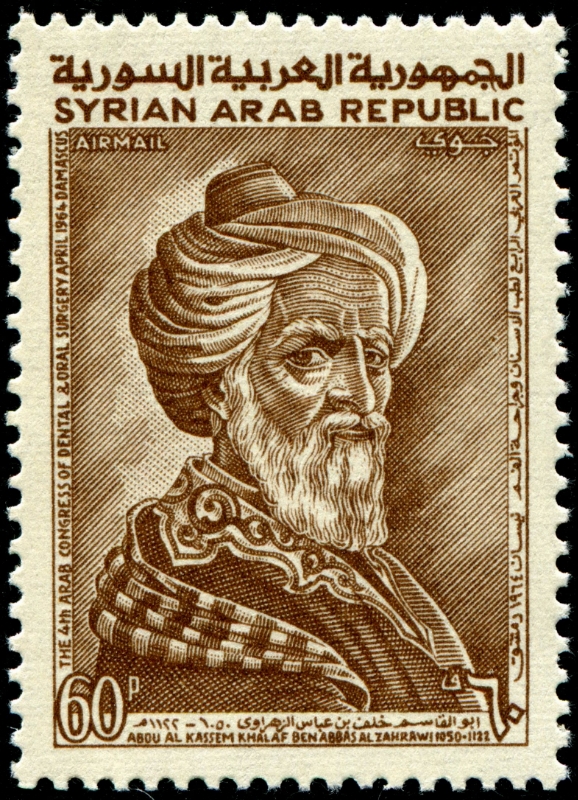 ExpandA stamp honoring Al-Zahrawi, the father of modern surgery
Al-Zahrawi is considered the father of surgery. The best hospitals in the entire world at this time were in Muslim cities. And here's something incredible: these hospitals treated poor people for free. Helping the poor was part of the religious duty, not optional charity.
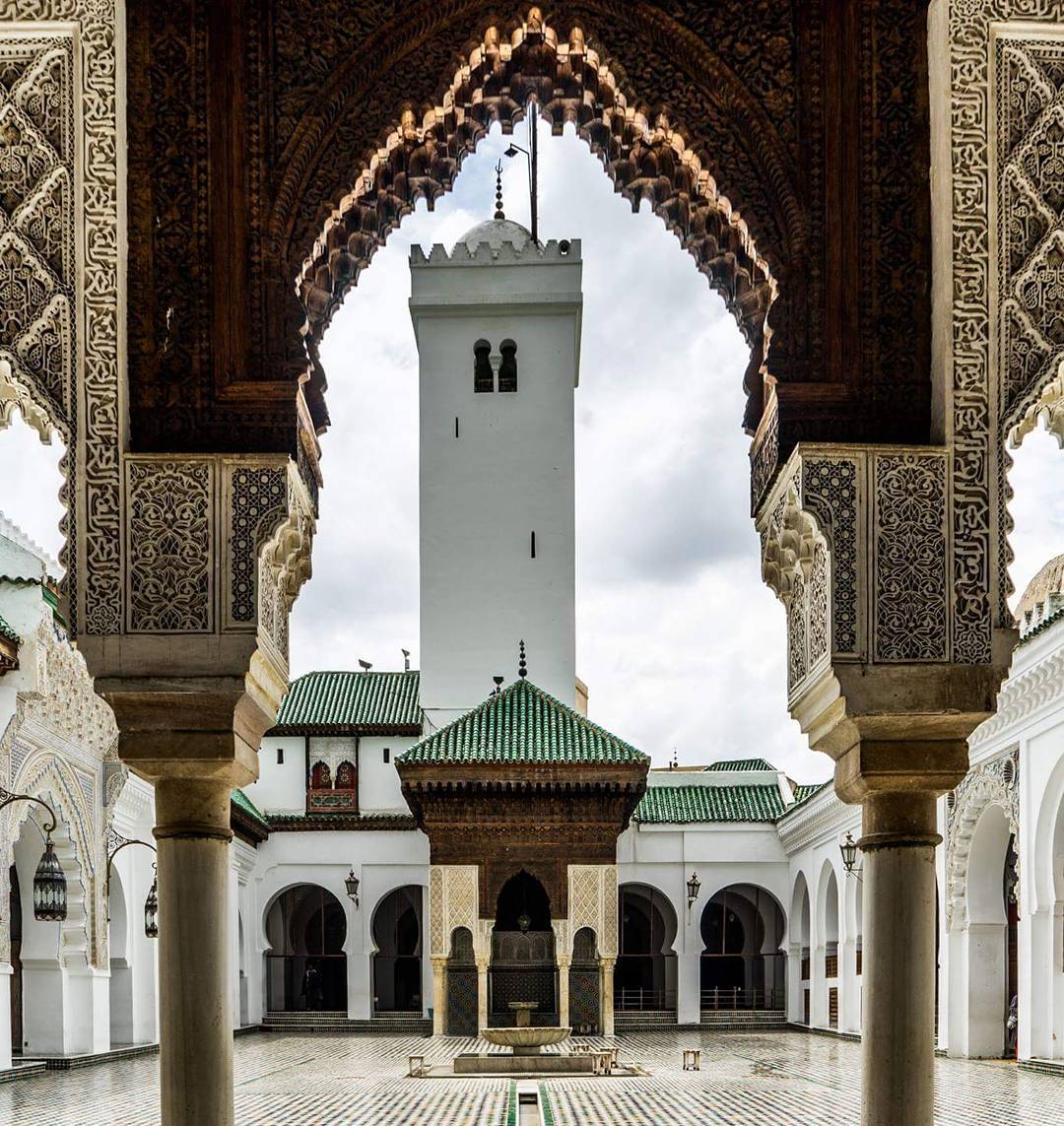 ExpandThe University of al-Qarawiyyin in Morocco, the oldest continuously operating university in the world
Al-Qarawiyyin in Morocco is recognized as the oldest university in the world still operating today. It was founded in 859 CE by a woman named Fatima al-Fihri, who used her entire inheritance from her father to build it.
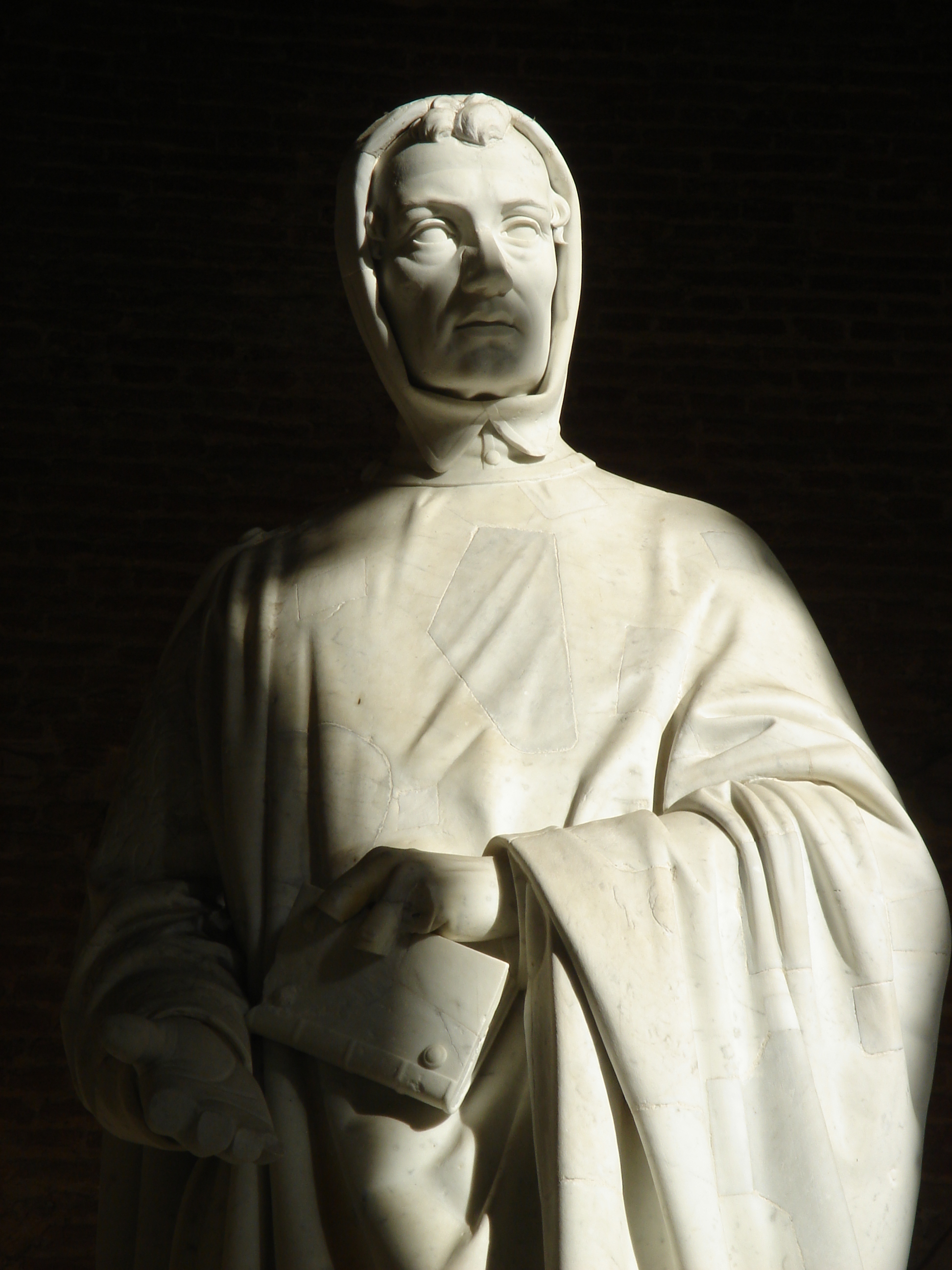 ExpandA portrait of Leonardo Fibonacci, the European mathematician who studied in Baghdad
Leonardo Fibonacci, the European mathematician famous for the Fibonacci sequence, personally traveled to Baghdad to study from Muslim mathematicians. He then brought their ideas back to Europe. The influence wasn't abstract. Europeans were literally making pilgrimages to the Islamic world to learn.
What About the Arabian Nights?
One cultural export everyone knows is One Thousand and One Nights, the collection of stories with Aladdin, Sinbad, and Ali Baba.
Interesting fact: most scholars believe these stories originally came from India, not Arabia. And at the time in Baghdad, they weren't even considered high-quality literature. Poetry, mathematics, and philosophy were the serious arts. Arabian Nights was more like popular entertainment.
It was actually Europeans who discovered these stories centuries later, fell in love with them, and kept them alive. Disney's animated movies trace back to this European rediscovery.
The End: The Mongols Destroy Baghdad (1258)
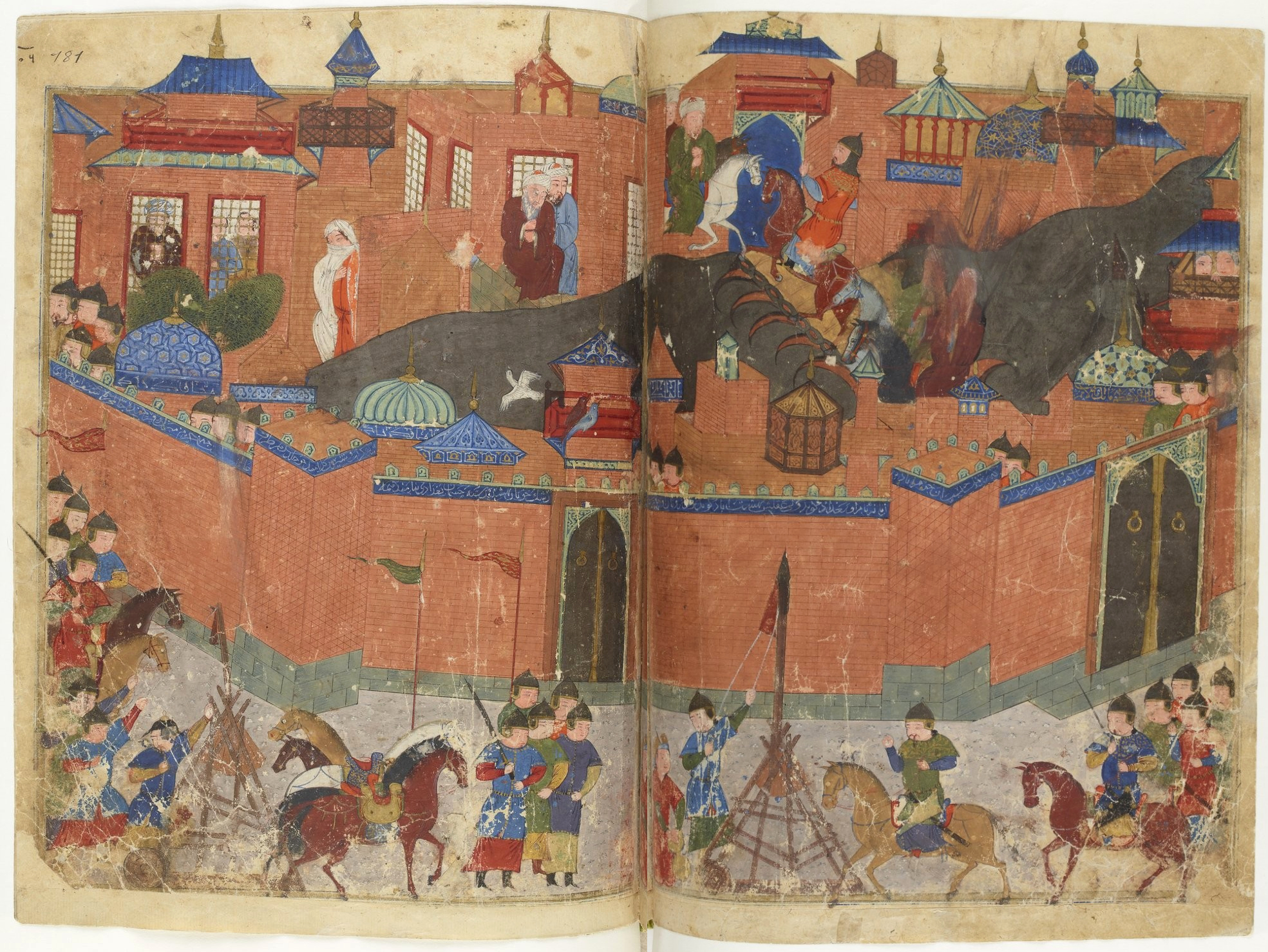 ExpandA historical illustration of the Mongol siege and sack of Baghdad in 1258
In 1258 CE, a group called the Mongols, fierce warriors from Central Asia, attacked Baghdad. Their leader was Hulagu Khan, grandson of Genghis Khan.
According to legend, they threw all the books from the House of Wisdom into the Tigris River. The water turned black from the ink. An enormous amount of human knowledge was lost forever.
This event is often marked as the end of the Islamic Golden Age. But it wasn't the complete end of Muslim intellectual life.
Ibn Khaldun: A Genius You've Never Heard Of
About 100 years after the Mongol attack, a North African scholar named Ibn Khaldun (1332 to 1406) wrote something remarkable.
He is considered the father of sociology (the study of how societies work), economics, and modern history writing. He was one of the first people to study history scientifically, looking for patterns, causes, and reasons instead of just telling stories.
His most famous idea is called Asabiyyah, which basically means group spirit or social togetherness.
His theory: the people who live on the edges of an empire, in deserts, mountains, or far-away places, are tougher, more united, and more motivated than the people living comfortable lives in the center. Over time, these edge people get strong enough to conquer the empire. Then they become comfortable and soft. And then their edge people overthrow them.
It's a cycle. And looking at history, it's hard to disagree.
Three More Empires After the Golden Age
Just because the Abbasid Caliphate fell didn't mean Islam stopped dominating the world. From 1300 to 1700, three massive Islamic empires ruled most of the world:
- The Ottoman Empire: controlled Turkey, the Middle East, and much of Europe's edge
- The Safavid Dynasty: ruled what is now Iran
- The Mughal Empire: ruled India, and at its peak was one of the richest empires ever
Together, these are called the gunpowder empires because they all used guns and cannons effectively. From Muhammad's first vision in 622 CE all the way to around 1700, over 1,000 years, the Islamic world was the leading civilization on Earth.
Further Reading
- Book: The House of Wisdom by Jim Al-Khalili. The clearest and most readable account of Islamic science.
- Wikipedia: Islamic Golden Age · House of Wisdom · Ibn Sina · Al-Khwarizmi · Ibn Khaldun
Keep reading