Why Islam Had a Golden Age and Why Europe Caught Up
The Islamic world led the world in science and learning for 1,000 years. Then Europe overtook it. The reason comes down to two ancient Greek philosophers.
So Islam dominated the world for over 1,000 years. Then Europe slowly caught up and eventually took over as the most powerful civilization. How did that happen?
To understand this, we need to compare the three big religions, Judaism, Christianity, and Islam, and see what made each one strong or weak in different situations. And we need to look at two very old Greek philosophers who had more influence on history than most people realize.
Comparing the Three Big Religions
Every religion has things it does really well. And every religion has weaknesses. Let's look at each one honestly.
Judaism: Smart People Who Argue a Lot
What's great about it: Judaism has a very rich tradition of stories, history, and ideas going back thousands of years. But more importantly, to be a proper Jew you had to be able to read. The religion required literacy. This created a culture that deeply respected education and learning.
This is a big reason why Jewish people have been so successful in universities, writing, science, and law throughout history. They came from a tradition that valued books and thinking.
What's difficult about it: The Jewish Bible (the Old Testament) is honestly very confusing. It contradicts itself. God behaves in ways that are hard to understand. Sometimes he's kind, sometimes he commands terrible violence. You need a rabbi (a religious teacher) to explain what it all means because reading it alone is not easy.
The biggest problem: if Jews are "God's chosen people," why have they been persecuted, kicked out of their homeland, and attacked for thousands of years? It's a question that has no easy answer, and it creates a lot of internal doubt and debate within the tradition.
Christianity: A Friendly God, but a Confusing Story
What's great about it: Christianity fixed the "difficult God" problem by giving God a human form. Jesus is someone you can understand. He's kind, he suffers, he sacrifices himself for others. That's much easier to connect with than the unpredictable God of the Old Testament.
Christianity also gave history a direction: everything is leading toward Jesus returning and making everything right. So even if life is hard now, there's hope.
What's difficult about it: The story is genuinely hard to explain. Why would God come to earth as a human? Why would he let himself be killed? The Holy Trinity, the idea that God, Jesus, and the Holy Spirit are somehow three separate things and also one thing at the same time, confused people for centuries and still does.
The biggest problem: God feels very far away. You can't talk to him directly. You need a priest or a bishop to be the middleman between you and God. That's a lot of power in the hands of the Church.
Islam: Clear, Simple, and Everywhere
What's great about it: Islam solved almost all of these problems at once.
First, it took the best parts of Judaism and Christianity and kept them. Abraham, Moses, Jesus: all of them are honored in Islam as prophets (messengers of God). Muhammad is simply the final and most complete prophet.
Second, and most importantly: in Islam, God is not far away. God is everywhere. Right here. Right now. You can feel him in the wind, see him in nature, sense him in your heart. You don't need a priest to connect with God. You can do it directly, five times a day, anywhere you are.
This is incredibly powerful. When you genuinely believe that God is with you at all times, it gives you strength, direction, and purpose. You know what's right and wrong. You know how to live. That clarity and energy is what powered the Islamic Golden Age.
Here's a line from the Quran that captures this perfectly:
"Not a leaf falls but He knows it. And there is not a single grain in the darkness of earth nor is there anything wet or dry but is in the clear record."
God isn't watching from a distance. He's here with you.
What's difficult about it: The Quran is considered perfect and eternal, the direct word of God. That means you cannot say "maybe the Quran got this part wrong." That's a problem because it makes the religion harder to update or reform.
Compare this with Christianity: because the Bible is complicated and full of contradictions, people have always argued about what it means. Those arguments eventually led to the Protestant Reformation, a complete overhaul of Christian practice. That kind of radical change is much harder in Islam.
Two Greek Philosophers Who Changed History
Here's something that surprised me when I first learned it. Both the Islamic world and medieval Europe had access to the same ancient Greek books. But they chose to follow different philosophers. And that choice changed everything.
Europe Chose Plato
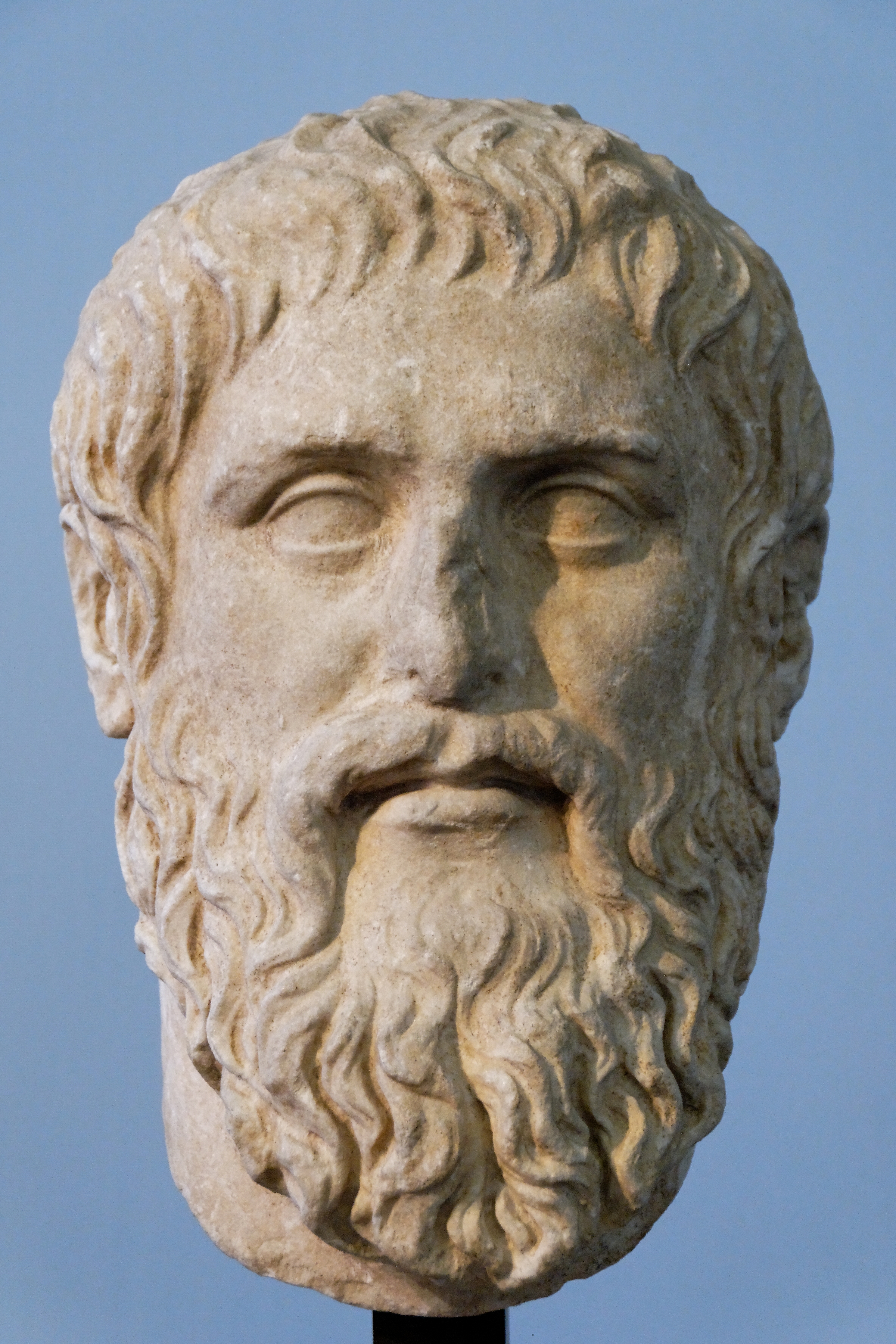 ExpandPlato -- the Greek philosopher whose ideas led Christian Europe to distrust the physical world and reject scientific inquiry
Plato believed that the physical world we live in is basically a fake version of a perfect world that exists somewhere else. Real truth is not found by looking at things around you. It's found through pure thinking and mathematics. The material world is corrupt and untrustworthy.
A Christian thinker named Augustine turned this into Christian theology: the world is fallen and sinful, our senses lie to us, and the only path to truth is through faith and the Church.
The result: if the world is corrupt and untrustworthy, there's no point in studying it carefully. Science becomes dangerous because you might find things that contradict the Church's teaching. The Pope becomes like Plato's ideal leader: the one person who truly understands the truth, and to whom everyone else must bow.
This is one big reason why Europe went through its Dark Ages. It had a way of thinking that said: don't question, don't explore, just obey.
Islam Chose Aristotle
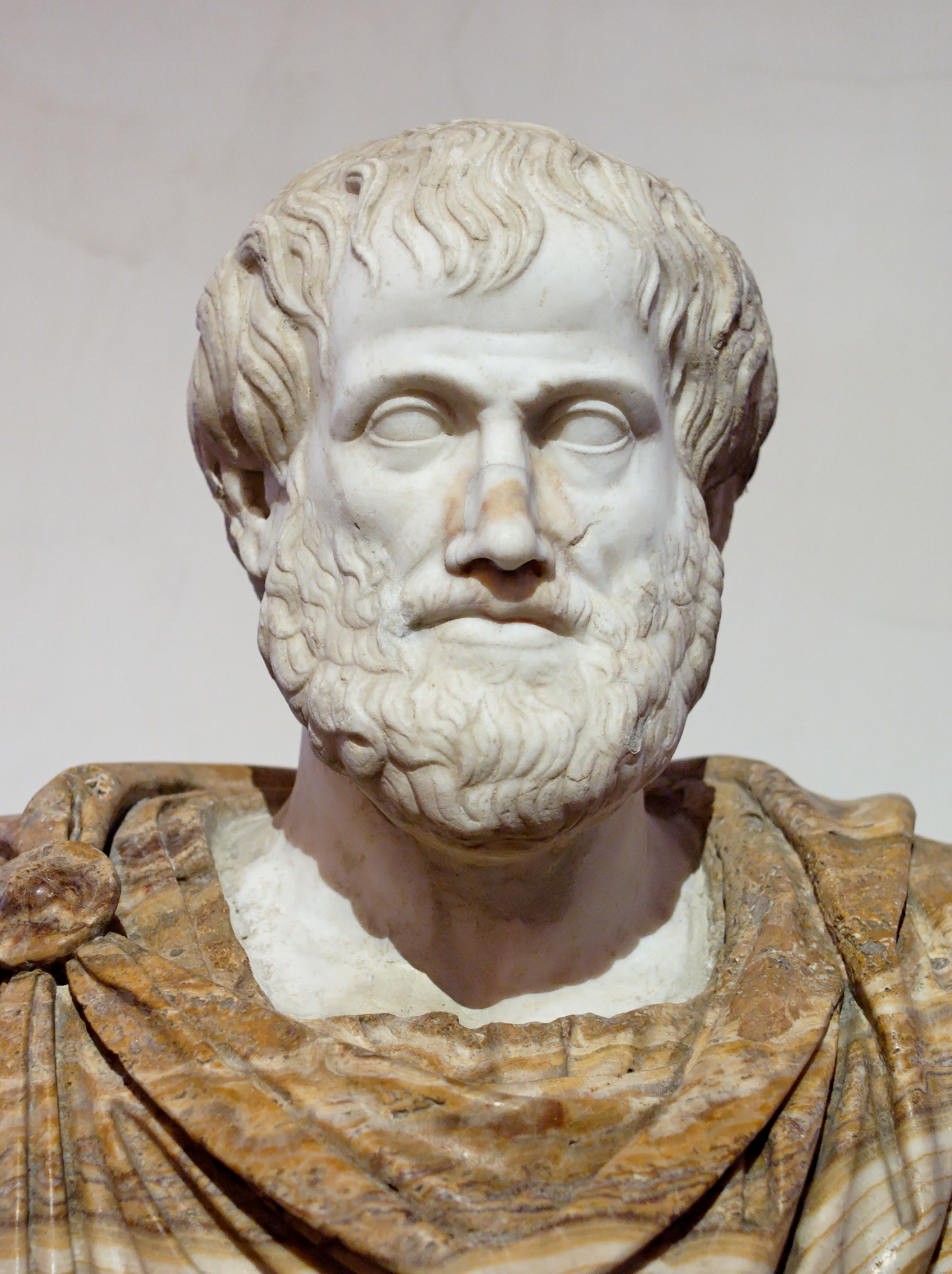 ExpandAristotle -- the Greek philosopher whose ideas powered the Islamic Golden Age: observe the world, study it carefully, and truth will follow
Aristotle had a completely different view. He said God created the world and set it in motion, and the world is real and worth studying. Truth is discovered by observing the world carefully, not by sitting in a room and just thinking.
Everything in the world has a purpose. A doctor's purpose is to be the best possible doctor. A mathematician's purpose is to understand mathematics as deeply as possible. You fulfill your purpose by going out into the world, observing, experimenting, and learning.
This is exactly how science works.
The Islamic Golden Age happened because Islam built its intellectual culture on Aristotle's idea: the world is real, observation leads to truth, and understanding the world is a form of worship.
That's why Muslim scholars were studying medicine, astronomy, optics, and mathematics while European scholars were mostly copying and memorizing old Church texts.
So How Did Europe Catch Up?
Europe caught up by doing three big things, and all three were borrowed, directly or indirectly, from the Islamic world.
1. The Renaissance. European scholars rediscovered the ancient Greek books, mostly through Arabic translations made by Muslim scholars. Without the House of Wisdom translating and preserving Aristotle, the Renaissance might not have happened.
2. The Protestant Reformation.
 ExpandMartin Luther -- his rejection of the Pope as middleman between God and people echoed what Islam had said for 900 years
Martin Luther rejected the idea that you need a priest or the Pope to connect with God. He said God is directly accessible to every person. This is exactly what Islam had been saying for 900 years. By reforming Christianity to be more like Islam in this way, Europe unlocked a huge amount of individual energy and creativity.
3. The Scientific Revolution. Europe built institutions (universities, scientific societies, printing presses) where the rule was: any idea can be challenged if you have evidence. This was the key step Islam never fully took. In Islam, the Quran set boundaries that couldn't be crossed. In the new European scientific tradition, nothing was safe from questioning, not even the most respected authorities.
This is the one area where Europe genuinely improved on what the Islamic world built. The Islamic world created amazing knowledge. But it didn't build strong enough systems to keep challenging and improving that knowledge over time. Eventually, ideas that were once revolutionary became fixed rules that no one was allowed to question.
The Pattern Across History
There's one final idea worth knowing. A thinker named Northrop Fry noticed a pattern: civilizations tend to produce their greatest creative work at the moment they go from being a small nation to a big empire.
Why? Because a small nation only knows its own traditions and culture. But when you suddenly rule a large empire with many different peoples, you're forced to absorb new ideas, new languages, new ways of seeing the world. That collision of different traditions creates something new and extraordinary.
- Ancient Greece produced its greatest thinking during the age of its empire
- The Jews produced their greatest writing when King David created a small but powerful kingdom
- England produced Shakespeare right when it was becoming a global empire
The Islamic world fits this perfectly. When the Abbasids moved to Baghdad and became a truly global empire, they absorbed Greek, Persian, Indian, and Chinese ideas all at once. The House of Wisdom was the place where all of this came together. And what came out of it changed the world forever.
The simple version: Islam built the first version of the modern world. Europe built the updated version. And without the first version, the second could not have existed.
Further Reading
Keep reading