The Three Ancient Places That Prove Religion Came Before Farming
Göbekli Tepe, Jericho, and Çatalhöyük were dug up in recent decades. All three point to the same answer: religion came first, farming followed.
The previous post asked a simple question: if farming was harder and less healthy than hunting, why did humans ever switch?
The answer most historians agree on today is religion. And the evidence comes from three real places that were dug up out of the ground in recent decades.
Göbekli Tepe: A Temple Built Before Any Village
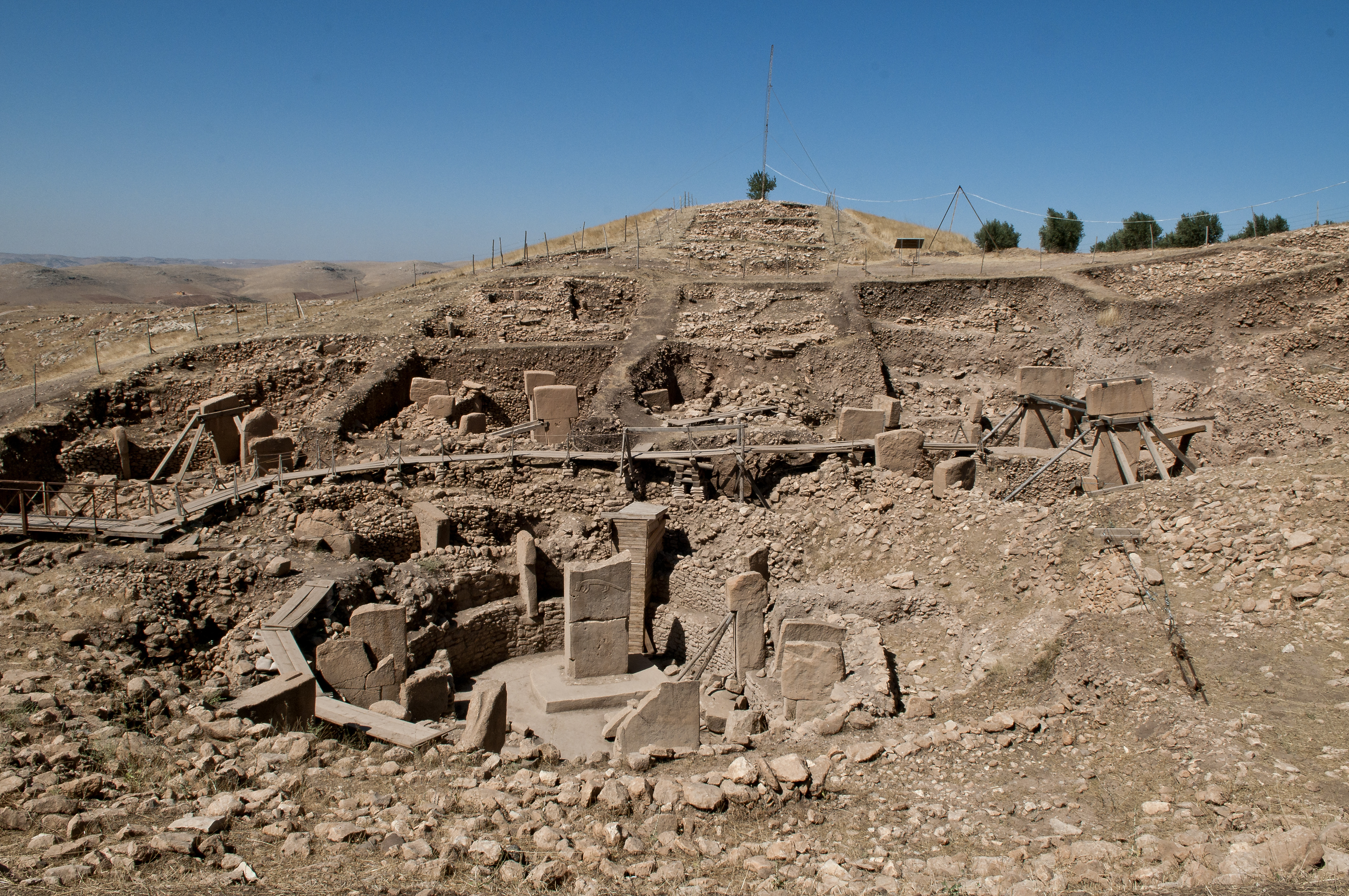 ExpandGöbekli Tepe site in Turkey, showing the ancient T-shaped stone pillars
In Turkey, there is an ancient place called Göbekli Tepe. It is about 11,500 years old. It has huge stone pillars, some as tall as a person, carved with pictures of animals: foxes jumping, birds with wings spread.
Here is what shocked historians: the temple came first. The houses came later. Nobody was living there permanently when this was built. Hunter-gatherers traveled from far away to come here for religious ceremonies, to meet other groups, to find husbands and wives, and to feast together.
The people who led these gatherings were probably shamans, individuals who claimed to connect the human world with the spirit world. Think of them like the early versions of figures like Jesus, Muhammad, or the Buddha: charismatic leaders who had visions and were able to inspire followers. Building this temple by hand, without any tools we would recognize, took years and hundreds of people. That kind of effort only happens with genuine faith.
Over time, some followers liked it so much they decided to stay. They built houses. A community grew up around the temple.
The pillars are also built so that the sun hits them in a particular way at certain times of year, almost like a giant clock. This was not decorative. It connected the people to the sky and the stars. To them, understanding the sky and worshipping the divine were the same thing.
Why Animals Are Carved on the Pillars
The pillars are covered in animal carvings: foxes mid-jump, birds in flight, all frozen in the moment of attack or motion.
Back then, humans did not see themselves as separate from the natural world. Animals, trees, and people were all equal. If you were going to kill an animal, you had to ask for its forgiveness first, otherwise its spirit would come back for revenge.
The carvings served three purposes:
- Respect. Carving the animal on the pillar was a way of paying tribute and asking for forgiveness before the hunt.
- Learning. Animals were the best hunters in the world. Before a trip, people would hold a ceremony to channel the animal's strength and skill.
- Friendship. You don't want to hunt foxes. You want to hunt gazelle -- more meat, easier to catch. So you want the fox on your side. The carvings were a sign of alliance.
This is probably one of the earliest religions we know of: a deep relationship between humans and the animal world, built on respect and ceremony.
We have only dug up about 5% of Göbekli Tepe so far. The rest is still underground.
Jericho: Hunter-Gatherers Who Stopped Moving
About 13,000 to 15,000 years ago, a group of people called the Natufians lived in the area that is now Israel and Syria. They were unusual: they were hunter-gatherers who did not move around. They stayed in one place.
How do we know? From gazelle bones. Gazelles eat different food in summer and winter, which changes the color of their teeth. Scientists found that Natufians were hunting gazelle in the same spot in both summer and winter, which means they were not following the herd. They stayed put.
The Natufians also knew how to plant seeds, but mostly chose not to farm. They had the knowledge but preferred hunting, probably because it was still easier and more rewarding.
What they did do was keep the skulls of their dead. They would cover a skull in clay, shape it back into a face, and keep it in their home. The dead person's soul was now in the spirit world. Keeping the skull let them stay connected to that world and receive wisdom from their ancestors.
This is also how they discovered things. They believed that through the skull, their ancestors could teach them how to read the stars, how to build structures that tracked the sky, and how to plant crops. Their method looked different from ours. The intelligence behind it was not.
Their science was religion. Our religion might look like science to people a thousand years from now. The sophistication was the same.
They also built the Tower of Jericho. Archaeologists first assumed it was a military watchtower. Then they realized: on the longest day of the year, a nearby mountain casts a shadow over the tower, and the tower casts a shadow over the entire village, covering it in complete darkness in the middle of the day.
They built this on purpose. Space is dark. If you can make your whole village go dark at midday, that feels like magic. It feels like proof that your leader truly speaks to God and that your community is connected to the sky.
Çatalhöyük: A City Where Religion Was Part of Daily Life
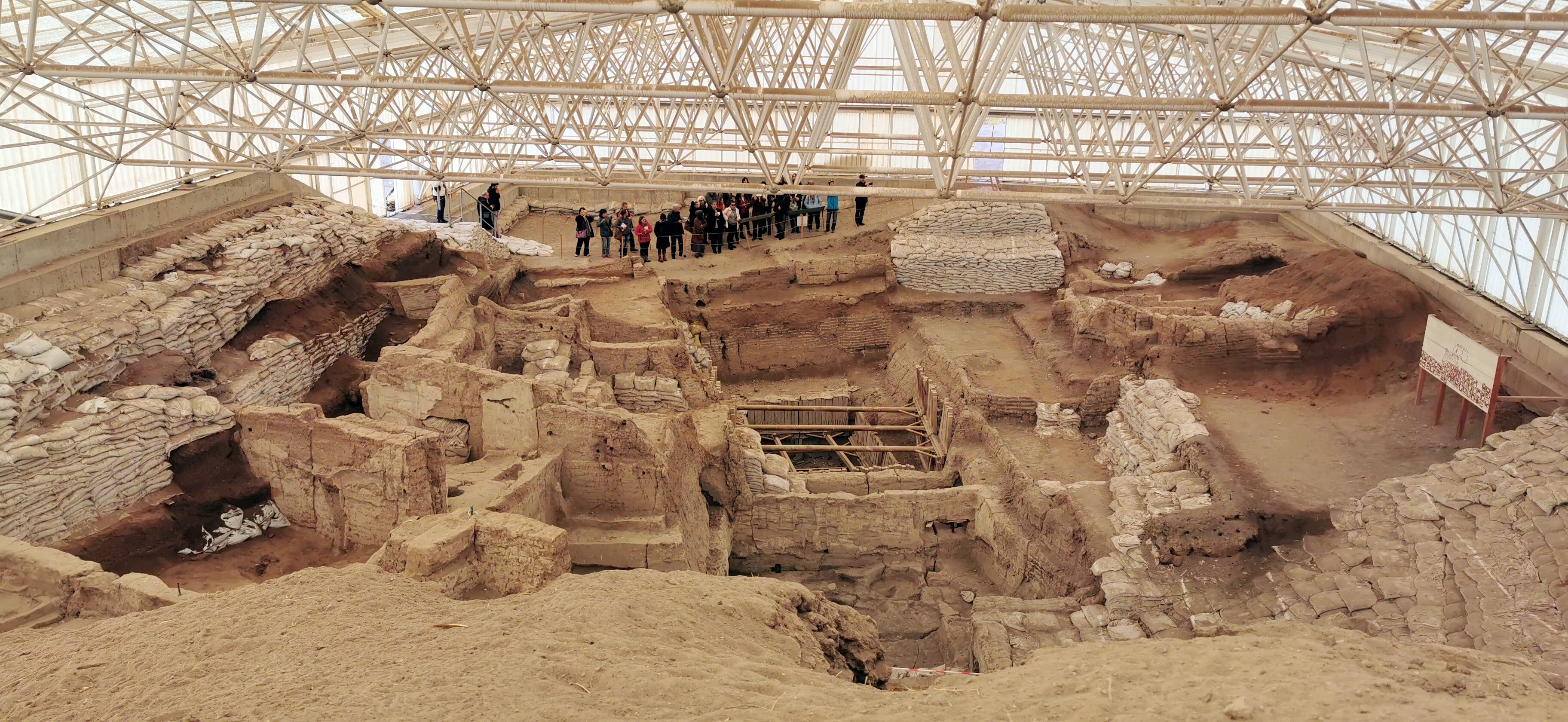 ExpandAerial view of the Çatalhöyük excavation site in Turkey
Around 7,500 BCE in Turkey, a place called Çatalhöyük was home to about 8,000 people. For that time, this was a large city.
What stands out: every house was exactly the same size. No palace. No big temple. No leader's house. Everyone was equal. And inside every single home, there was a small religious space, a mini-temple built into the living room.
At earlier places like Göbekli Tepe, people visited a religious site maybe once a year. At Çatalhöyük, religion was part of every single day, from birth to death.
The people here worshipped a mother goddess, a female god who represented life, birth, and nature. She was shown as a bird, especially a vulture, because birds move freely through the sky. The sky belongs to them.
When someone died, the family left the body outside. Vultures came and ate the flesh. People believed this was the goddess taking the person back. The bones were then brought inside and buried under the floor. The skull stayed in the living room to keep the connection with the ancestor alive.
Many Çatalhöyük homes also have a painting of humans surrounding a large animal, arms raised, bodies moving. Some historians think they are mocking the animal to tame it. But the more likely reading is that they are dancing: a ceremony performed before a hunt, paying tribute to the animal they are about to kill. The same logic as Göbekli Tepe. We respect you. We are sorry. Your body feeds us but your soul lives on. Hunt with that understanding, and nature stays in balance.
The bull appears everywhere too, painted on walls and carved in stone. If the mother goddess represented life and birth, the bull represented energy and strength. Neither could create life alone. Only when both came together could anything be born. This was their explanation for how the world keeps renewing itself.
Çatalhöyük was not just a place with a religion. It was a place where religion answered everything: why people are born, why they die, where they go, how to hunt well, how to stay connected to the sky.
So What Actually Happened?
Religion brought people together. Charismatic leaders built sacred places. Hunter-gatherers traveled from far away to worship, feast, and meet partners. Some stayed. Communities formed.
As more people settled in one place, the surrounding land could not feed everyone through hunting alone. The only solution was to start growing food. Farming did not create civilization. Religion created community, and farming followed because it had to.
When a community eventually grew too large for its land, some people left and moved somewhere new, taking their religion and their farming knowledge with them. That is how both spread across the world.
There was no single moment when this happened. It took thousands of years. Hunting and gathering was easier, healthier, and more attractive. But once religion tied people to a place and to each other, there was no going back.
Further Reading and Watching
Keep reading