Shamans, Symbols, and Why Religion Is What Makes Us Human
Who painted the cave walls? Why do the same symbols appear across caves worldwide? And why did Immanuel Kant, Émile Durkheim, and modern neuroscience all reach the same conclusion about what it means to be human?
The previous post showed that Ice Age cave paintings were not art -- they were religion. People painted animals in the deepest, most acoustically resonant parts of caves as part of ceremonies involving music and dance. The belief behind them: every living thing has a soul, all life comes from the Mother Goddess, and when you kill an animal, you must return its soul to the spirit world to keep the balance.
Now: who actually made these paintings? What do the symbols on them mean? And what does all of this tell us about what it means to be human?
Shamans: The People Who Crossed Worlds
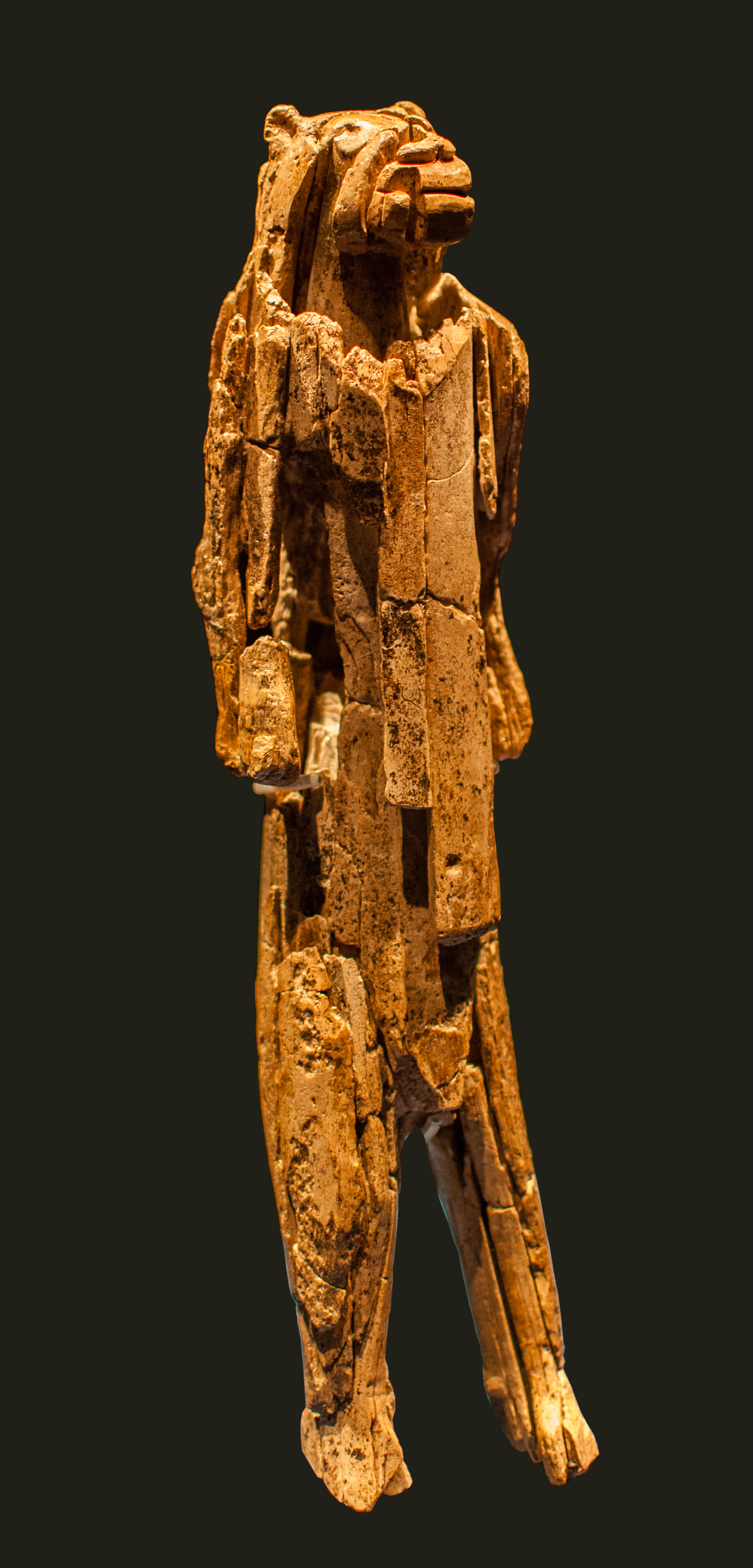 ExpandThe Lion Man of Hohlenstein-Stadel -- a 40,000-year-old ivory figurine showing a half-human, half-lion figure, widely believed to be the world's oldest known shaman carving
Some cave paintings show figures that are part human, part animal. Others show beings dressed as birds, arms spread wide. These are shamans -- people believed to be able to cross between the human world and the spirit world.
In one painting, the mother goddess takes the form of a bird and herds animals from the spirit world back into this one. Shamans would dress as birds to channel her energy and communicate with animals and the spirit world at the same time.
Who became a shaman? Often, people who were different.
One skeleton from about 10,000 years ago is of a person with dwarfism. DNA analysis shows this person ate exactly the same quality of food as everyone else, despite not being able to contribute to hunting. At the end of their life, they received an elaborate burial -- a sign of being deeply valued.
The book The Dawn of Everything by David Graeber and David Wengrow documents this is not an isolated case. Archaeological surveys of Ice Age hunter-gatherer burials consistently find a high proportion of people with physical disabilities receiving elaborate funerals.
The most likely explanation: they were shamans. In this belief system, being different does not mean being less. It means the Mother Goddess gave you something special. A person who could not hunt had time and reason to go deeper into meditation and contact with the spirit world. They were probably the ones who painted the cave walls.
The Symbols: The Same Signs Across the Whole World
A Canadian anthropologist named Genevieve von Petzinger spent years documenting Ice Age cave paintings around the world. She found something remarkable: the same symbols appearing repeatedly across different caves on different continents.
The hand. The spiral. The circle. The quadrangle. The asterisk.
Why use symbols alongside drawings? Three theories:
1. Visualizing ideas you cannot draw. You can draw a horse. You cannot draw energy, cycle, life force, or balance. Symbols carry those ideas. With symbols, each painting becomes a story, not just a picture.
2. The language of the spirit world. Shamans used psychedelic plants to access altered states. People in those states consistently report seeing geometric patterns and shapes. The symbols may be what shamans saw in the spirit world, brought back and recorded on the wall.
3. Sacred mystery. Things that cannot be fully explained feel divine. The symbols made the paintings sacred. Mystery gives something power.
Reality Is Something the Mind Creates
The psychedelics theory connects to a much bigger idea.
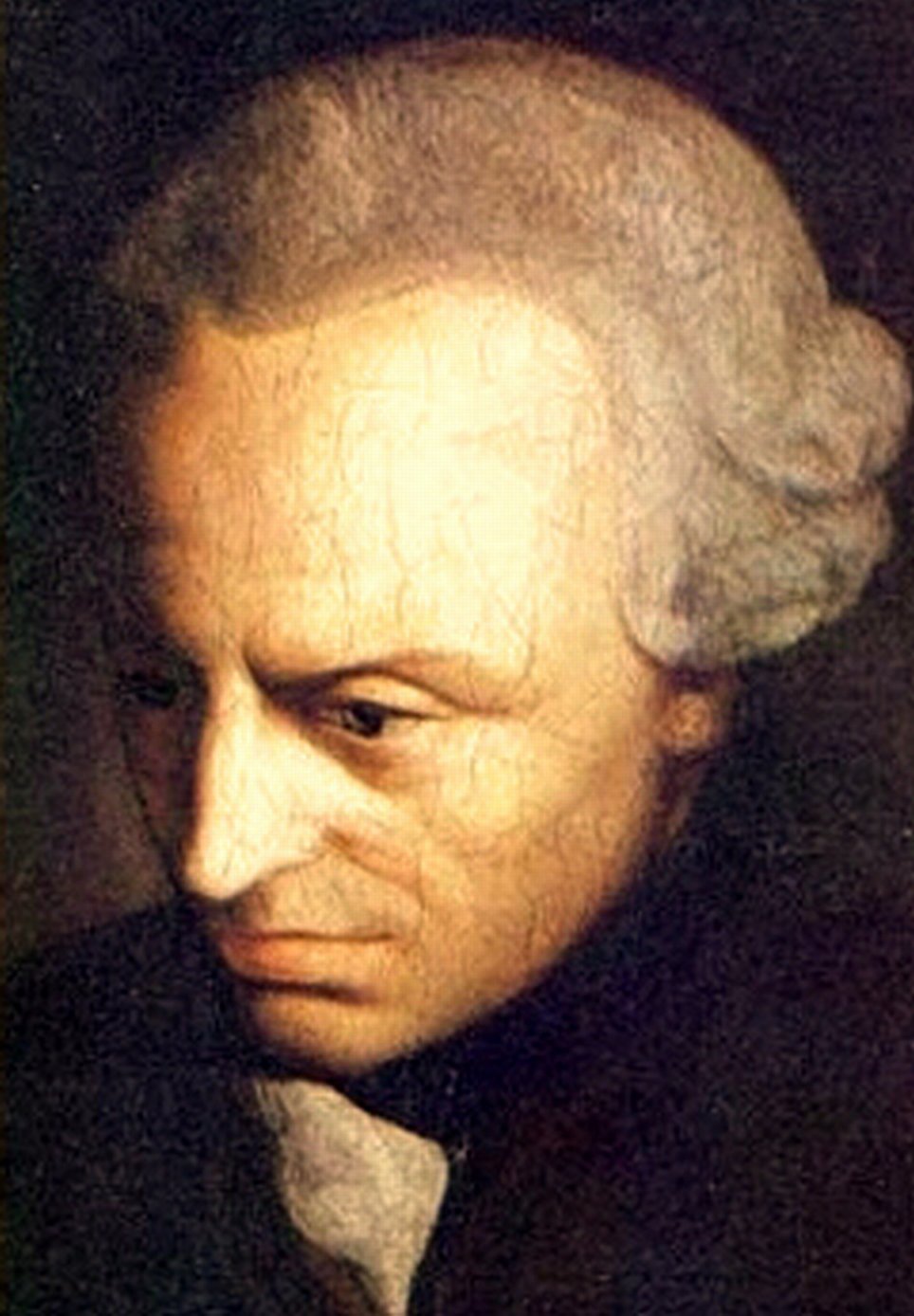 ExpandImmanuel Kant -- the German philosopher who argued that reality is something the mind actively creates, not passively receives
A German philosopher named Immanuel Kant -- considered by many the greatest philosopher who ever lived -- made an argument that shocked people: reality is not something we passively experience. It is something our minds actively create.
His example: time. The idea that time moves from one to two to three does not exist in nature. It is something the human mind imposes on experience.
Modern neuroscience has confirmed this. The brain does not simply record what is in front of it. It predicts, fills gaps, and projects a version of reality. What we call "seeing the world" is really the brain constructing a model and showing it to us.
What psychedelic plants do is change the structure of that model. They shift how the brain projects reality. People report seeing geometric patterns, symbols, other dimensions. From the perspective of early humans, they were accessing another world. From neuroscience, they were experiencing a different version of the one they already live in. Either way, what they saw felt real. And they painted it on the walls.
Women, Power, and the Sacred
One more thing the cave paintings suggest: for most of human history, women were not considered inferior to men. If anything, the opposite.
The central god was a mother goddess. The mysterious act of giving birth was the most powerful thing in the world. Only women could do it. That made women sacred.
For most of human prehistory, either men and women were equal, or women held more social power. The shift to male dominance is recent. How it happened is a later story.
Why Symbols? The Three Things Art Was Doing
Putting it together, the symbols in the cave paintings were doing three things:
-
Visualizing mythology. Ideas like energy, cycle, and life force cannot be drawn literally. Symbols carry them. Each painting is a story about how the world works.
-
Showing underlying reality. The symbols point to what is beneath the surface: the soul, the spirit world, the force connecting everything. Art and religion were the same thing. There was no separation.
-
Creating a shared language. When a group of people understand the same symbols, share the same stories, and hold the same beliefs, they become a society. A collective imagination is what holds people together. That collective imagination is what we call religion.
Religion Is What Makes Society Possible
 ExpandÉmile Durkheim -- French sociologist who argued that religion and society are inseparable: you cannot have one without the other
The French sociologist Émile Durkheim -- considered the founder of sociology -- put it plainly:
"Religion is above all a system of ideas by which individuals imagine the society of which they are members."
Religion is not primarily about God. It is about creating a shared way of understanding the world so people can live together and cooperate.
From religion, we developed philosophy. From philosophy, science. Durkheim argued that science today is essentially our religion -- a collective attempt to imagine how the world works, updated as evidence arrives. The form changes. The impulse is the same.
His deeper point: you cannot have religion without society, and you cannot have society without religion. They create each other.
A human being alone in the wilderness is not fully human. To be human is to live with others, to share a story about the world, to have a collective consciousness. That shared story is religion.
We Are Not Just Economic or Biological Animals
Two famous thinkers gave us the dominant theories of what drives human behaviour.
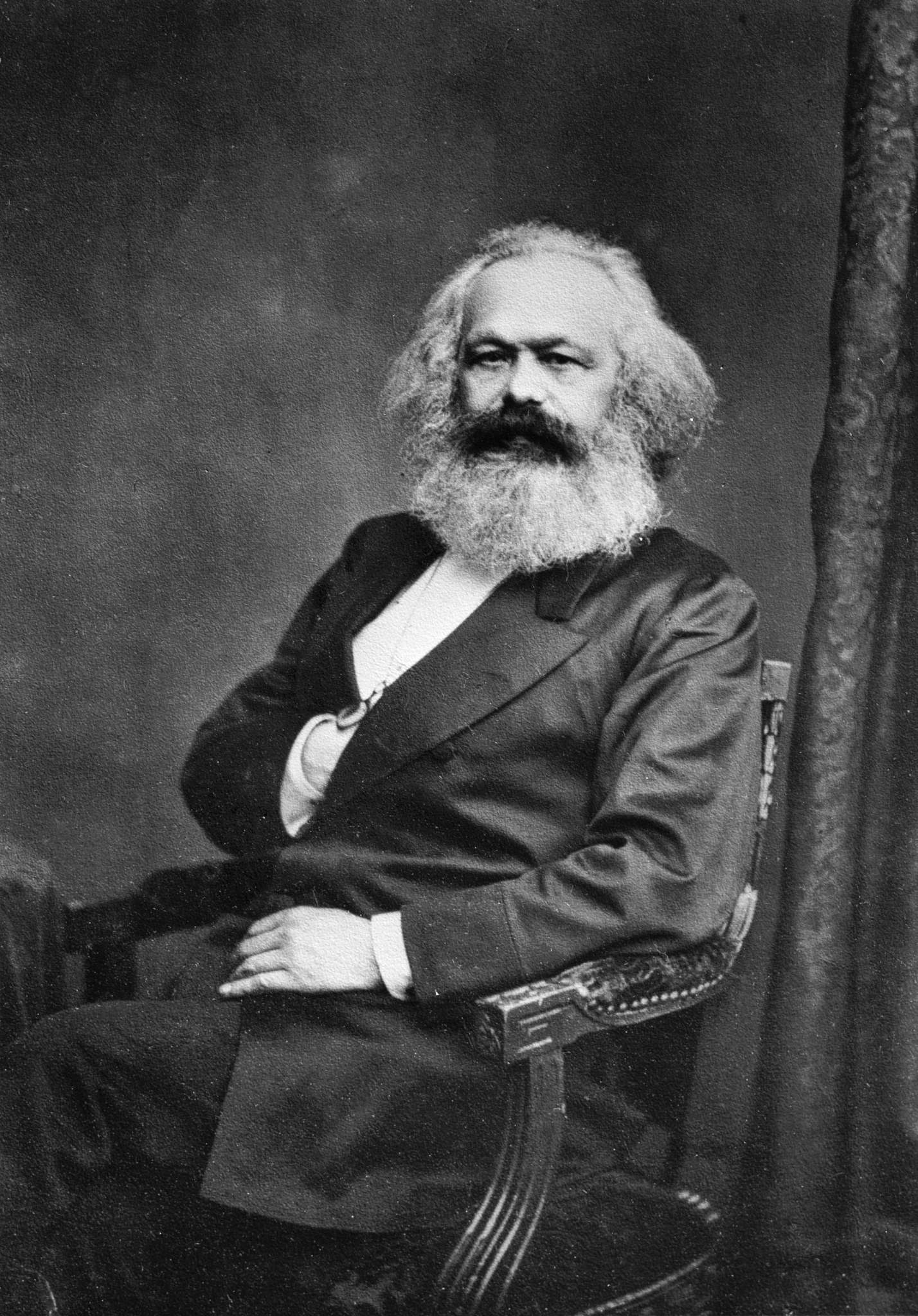 ExpandKarl Marx -- argued that economic interest is the engine of all human behaviour and history
Karl Marx said we are economic animals. We are driven by the need for money, security, and resources. Everything we do comes back to economic interest.
Charles Darwin gave us the biological version. We are driven by the need to pass on our genes.
Both contain truth. But neither is the full picture.
The argument here is that we are, first and most deeply, religious animals. We have a fundamental need to understand why we exist and to connect with others. Without that, the economic and biological drives have no framework to operate inside.
The three forces -- religion, economics, and biology -- interact. A religion that fails to meet the economic and biological needs of its people will be abandoned or changed. An economic system with no shared values will hollow out. A biological creature with no story about the world is just an animal.
Human history is the story of how these three forces push and pull against each other. That is what we will keep coming back to.
Further Reading and Watching
- Book: The Dawn of Everything by David Graeber and David Wengrow -- challenges almost everything you think you know about early human society
- Book: The Elementary Forms of Religious Life by Émile Durkheim -- the original argument that religion and society are the same thing
- Wikipedia: Shamanism · Genevieve von Petzinger · Animism · Lion-man of the Hohlenstein-Stadel
Keep reading